The Fifth Undergraduate Seminar Session
UGS 5 closed out the semester with three talks spanning the foundations of mathematics, the theory of distributed computing, and complex analysis. As always, the seminar gives students the chance to present research they've developed with support from the Math Society, with papers reviewed by faculty before the talks are given.
Speakers & Topics
-
Alexei Khovrenkov – Gödel's Incompleteness Theorems: When Mathematics Met Its
Limits
Traces the search for a perfectly complete and consistent foundation for
mathematics, from Leibniz and non-Euclidean geometry through Hilbert's program, and explains how Gödel's
two incompleteness theorems showed that any sufficiently powerful formal system will always contain true
statements it cannot prove — with consequences that reach into computability theory, AI, and
philosophy.
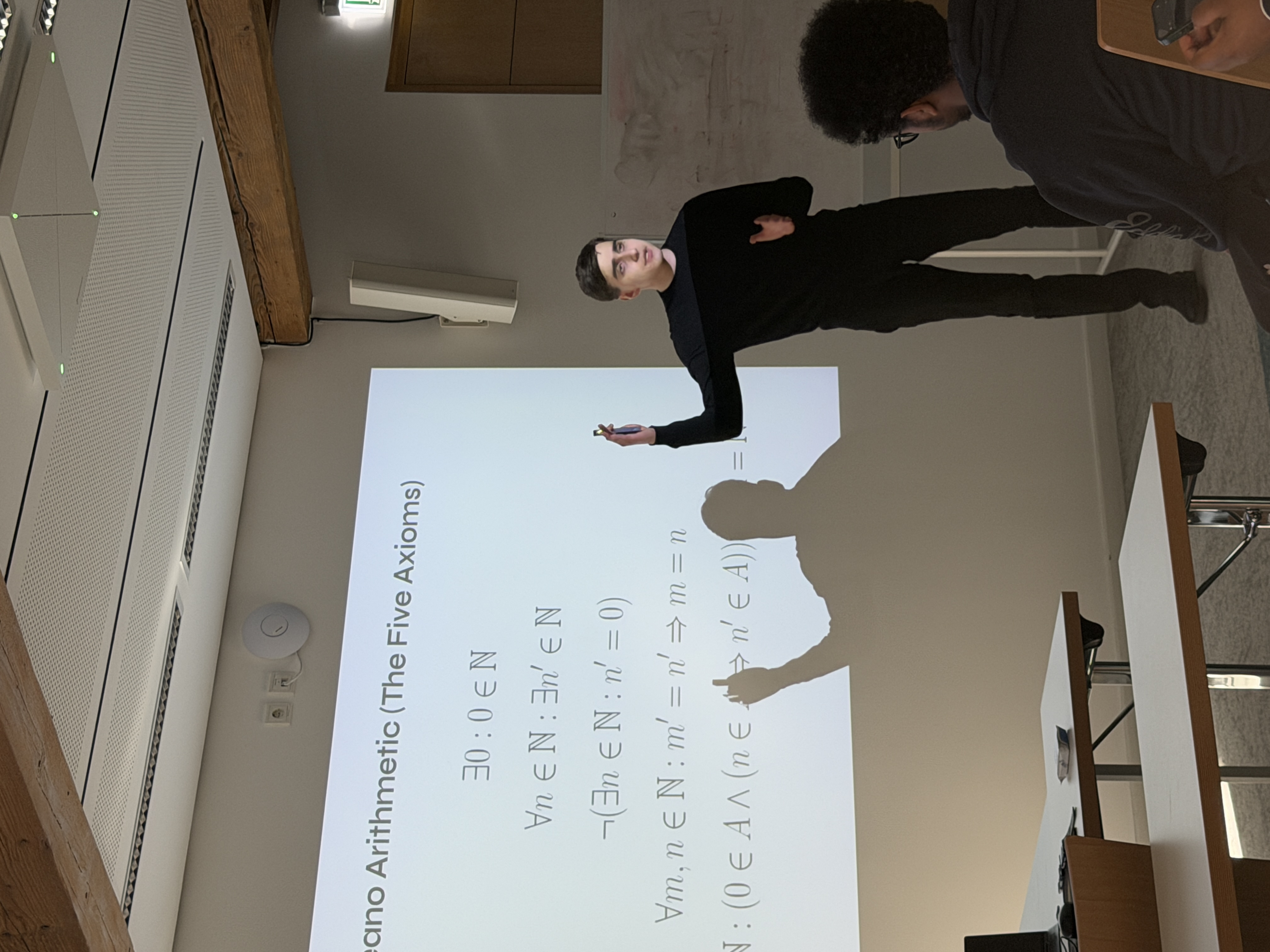
Introducing the Peano arithmetic
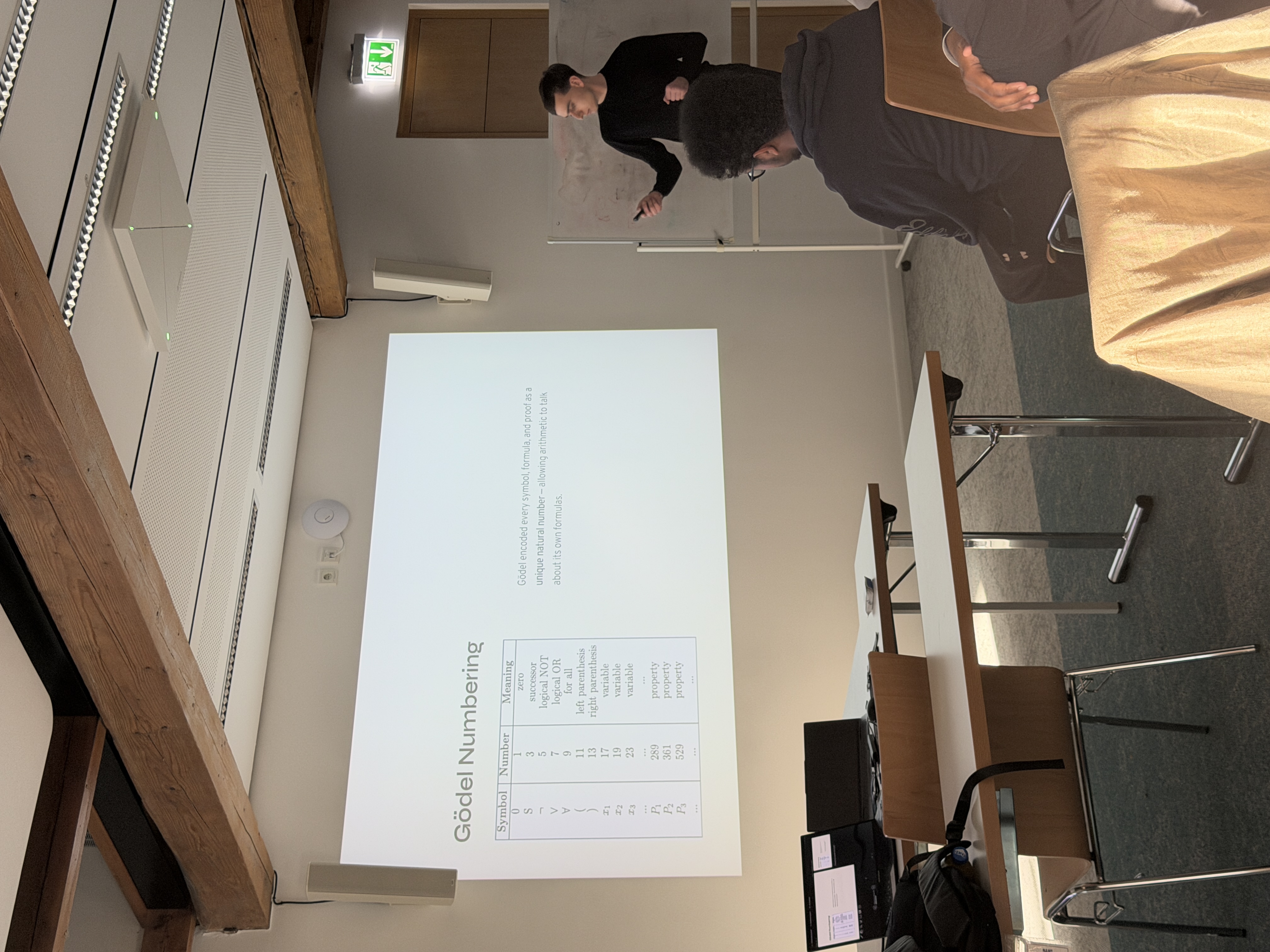
Walking through Gödel numbering and the diagonal lemma
-
Dr. Ivan
Ovsyannikov – Discussion: Parallel Lines in Hyperbolic Geometry
Following Alexei's talk, Dr. Ovsyannikov took the whiteboard to expand on the
parallel postulate, unpacking how "parallel" is defined once you move from Euclidean to hyperbolic
(Lobachevskian) geometry — where non-intersecting lines through a point split into two special
boundary lines, and triangles can be built from mutually parallel sides with no vertices.
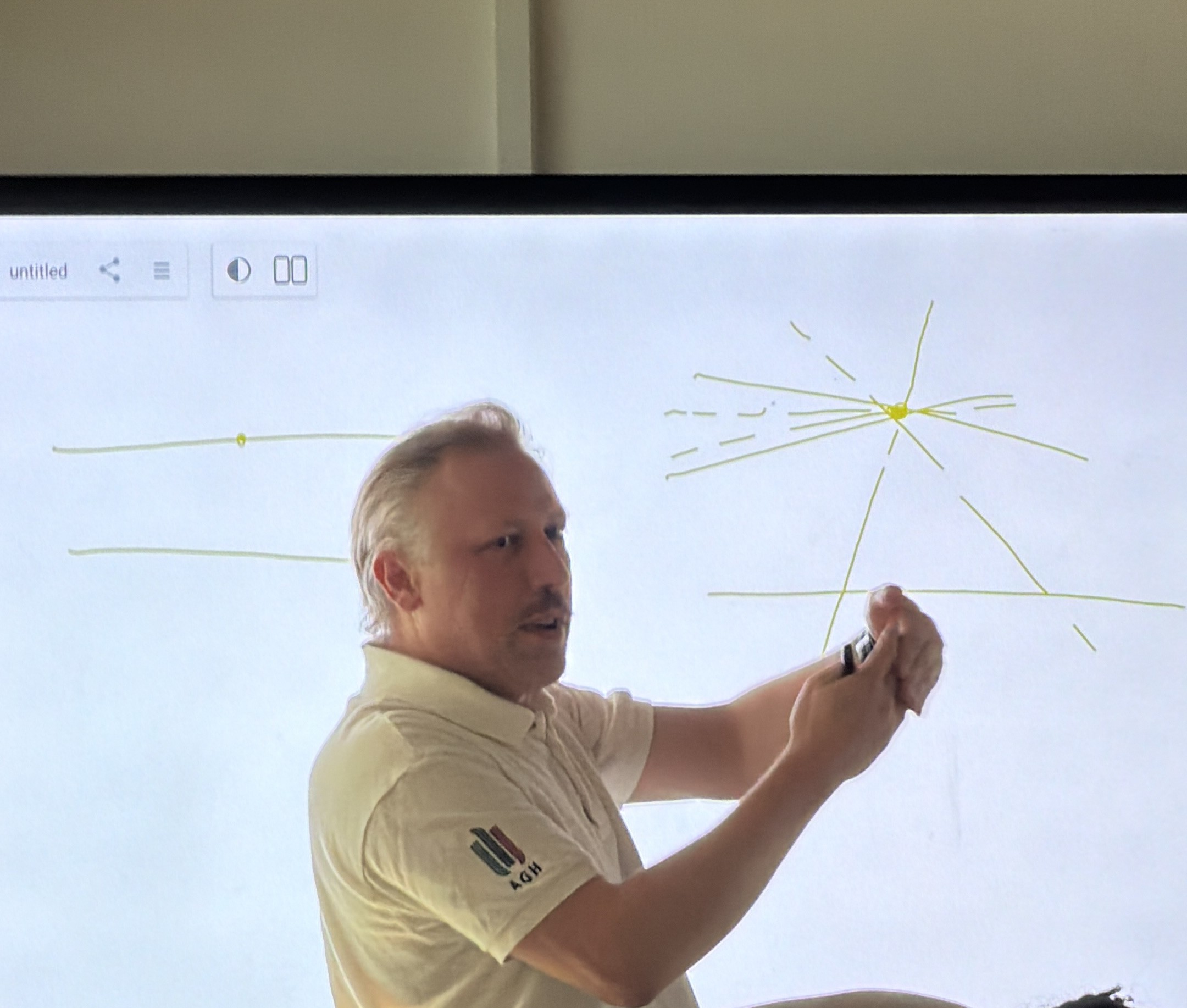
Dr. Ivan Ovsyannikov at the whiteboard
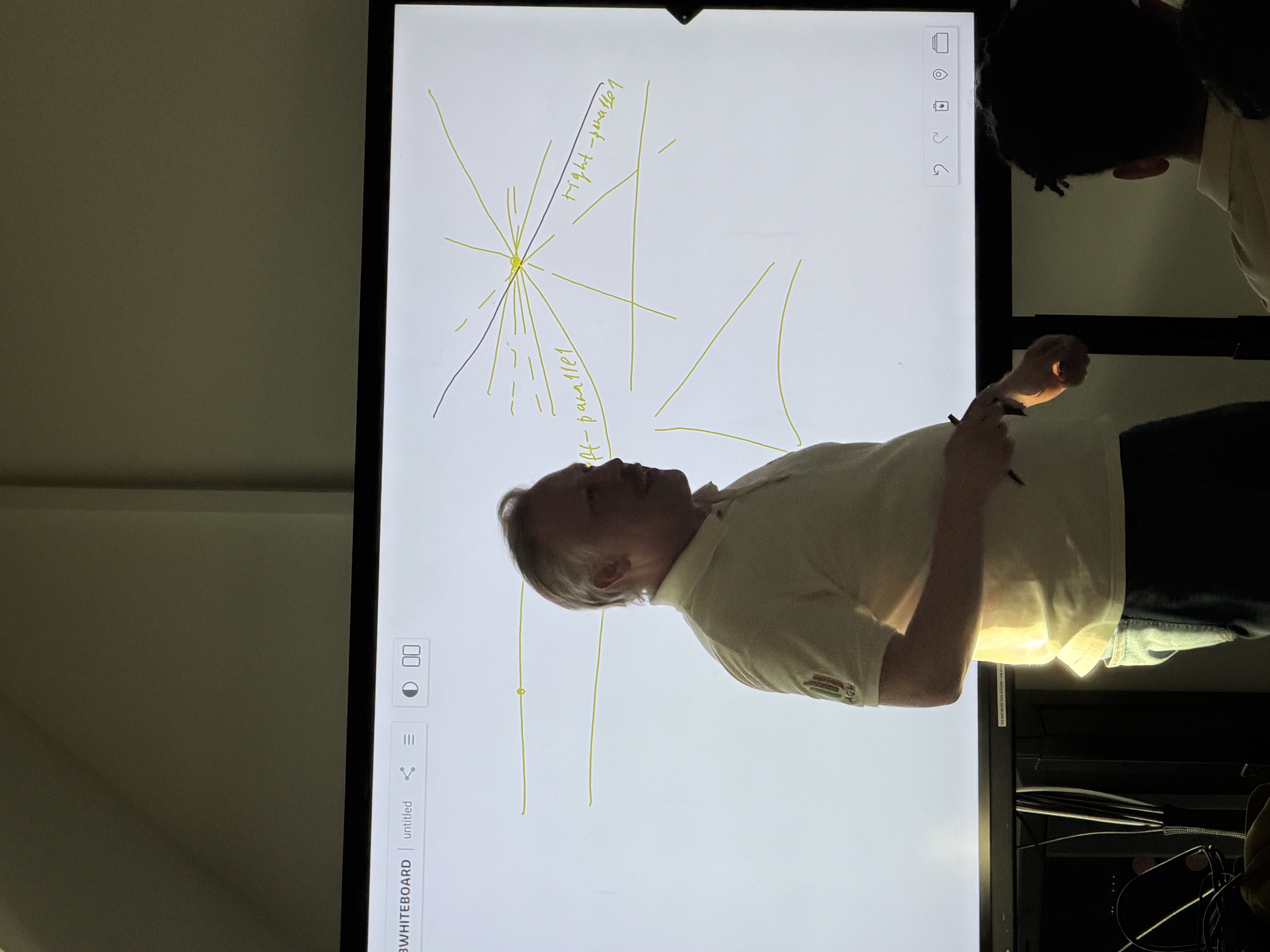
Explaining the concepts of hyperbolic geometry
-
Taha Hbirri (Class of 27, CS) – The FLP Theorem: Why Consensus Is
Impossible in
an Asynchronous System
Starting from Lamport's "happened-before" relation and the problem of ordering
events across machines that don't share a clock, this talk builds up to the FLP theorem: the result that
no deterministic algorithm can guarantee consensus in an asynchronous distributed system if even one
process can fail — a foundational impossibility result for distributed systems.
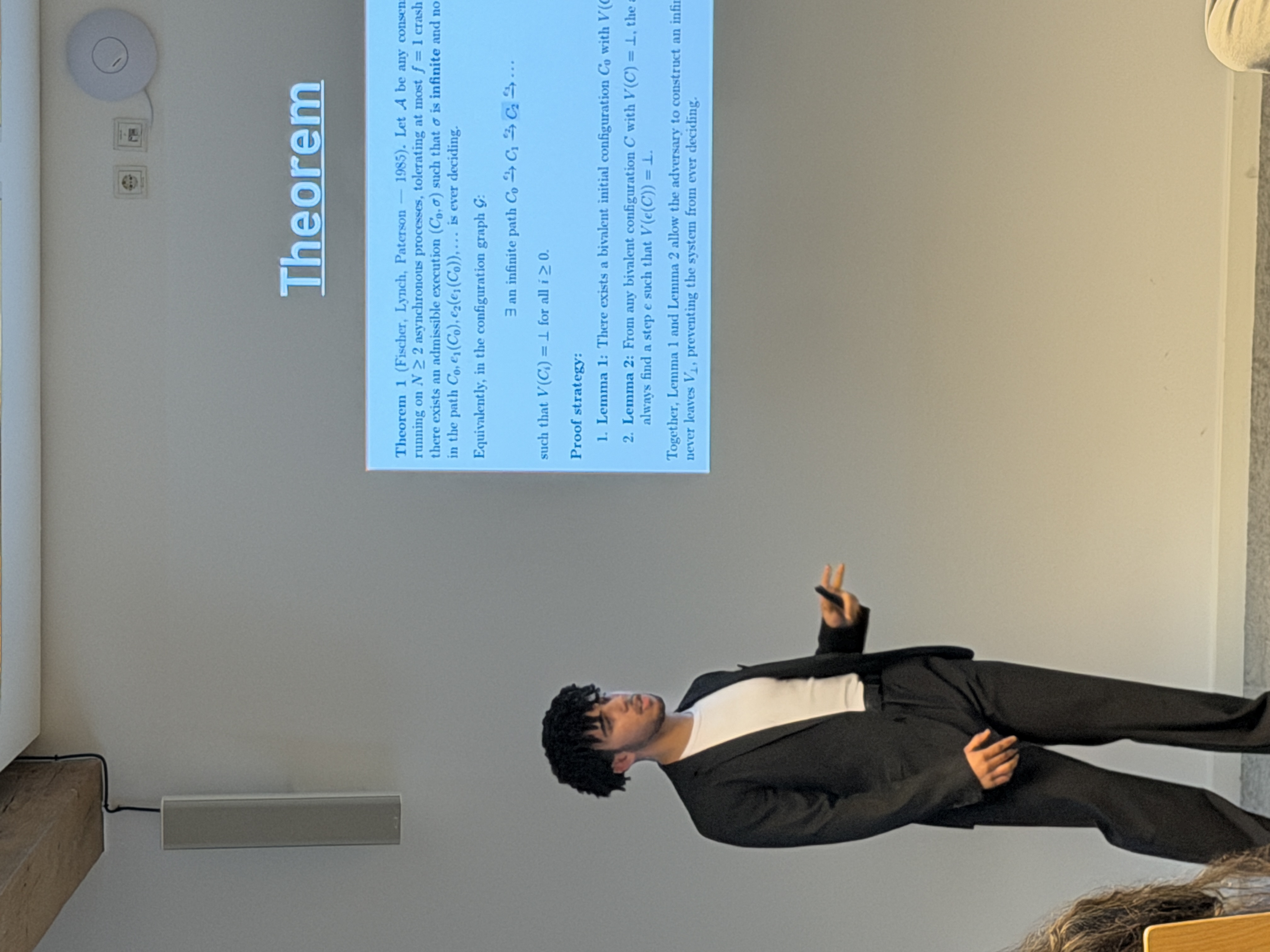
Introducing the consensus problem in distributed systems
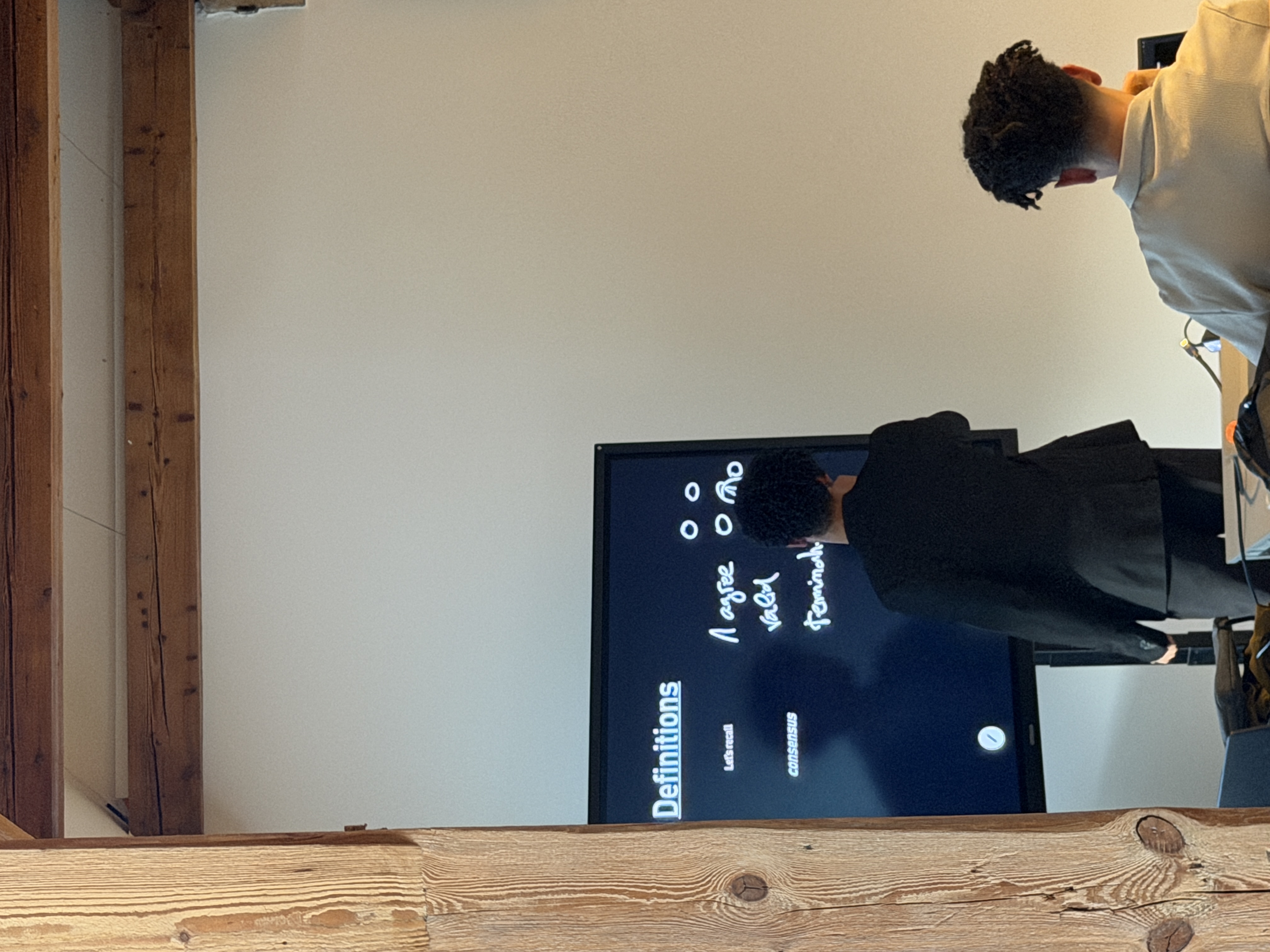
Working through the FLP theorem
-
Pablo Santos Guerrero – The Fundamental Theorem of Algebra and the Geometry of Zeros
and Poles
Looks at the Fundamental Theorem of Algebra through the lens of complex
analysis, connecting the existence of roots of polynomials to the geometric behavior of zeros and poles
of complex functions.
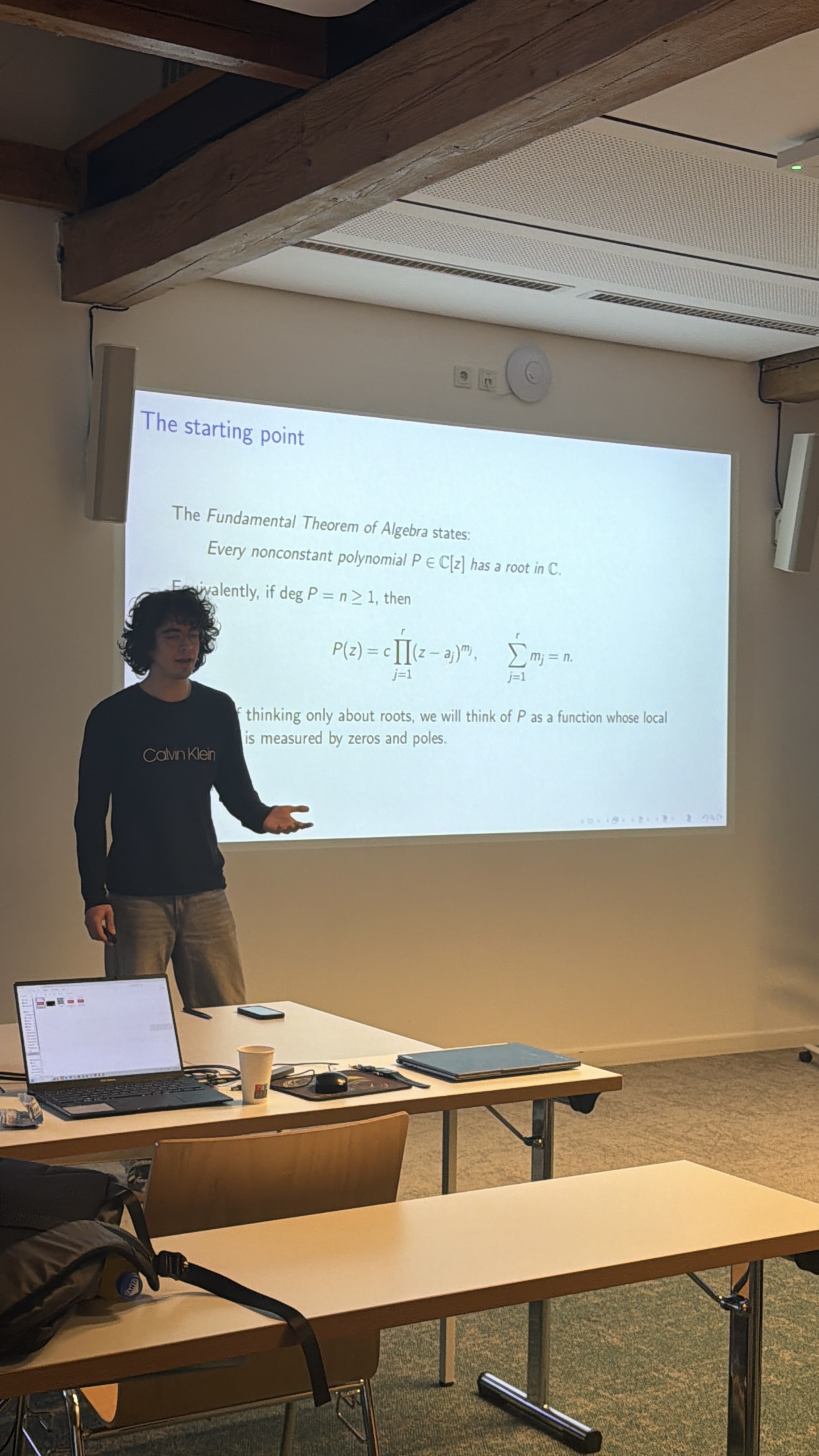
Pablo Santos Guerrero introducing the Fundamental Theorem of Algebra
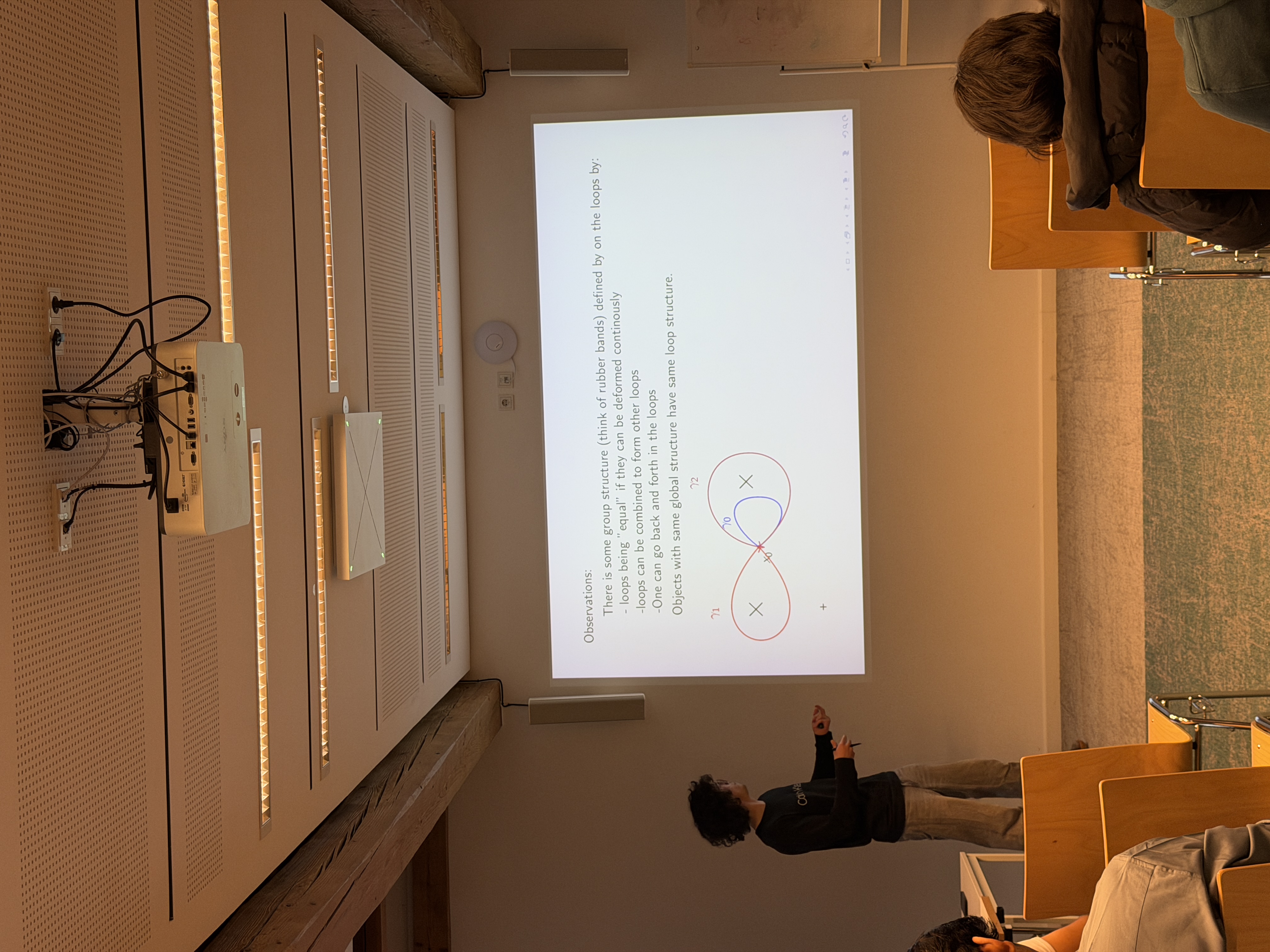
Explaining objects with the same global structure
Watch the full UGS V session