Can mathematics prove that lying pays off? In poker, the answer is surprisingly—yes.
This was the third episode of "The Math Behind..." series, where Math Society dove into the mathematical foundations of poker and game theory. Led by Professor Keivan Mallahi-Karai, we explored one of the most counterintuitive results in game theory: bluffing isn't just psychology—it's mathematically necessary for optimal play.
Building the Foundation
Professor Mallahi-Karai didn't start with complex poker hands. Instead, he designed a simplified poker game that captured the essential mathematical principles without overwhelming complexity. This approach allowed us to see the core ideas clearly before adding layers of sophistication.
The progression was masterful: we started with basic probability, moved into understanding expected outcomes, and gradually built up to game-theoretic equilibrium. Each step revealed why certain strategies dominate others, and why pure strategies (never bluffing or always bluffing) fail against intelligent opponents.
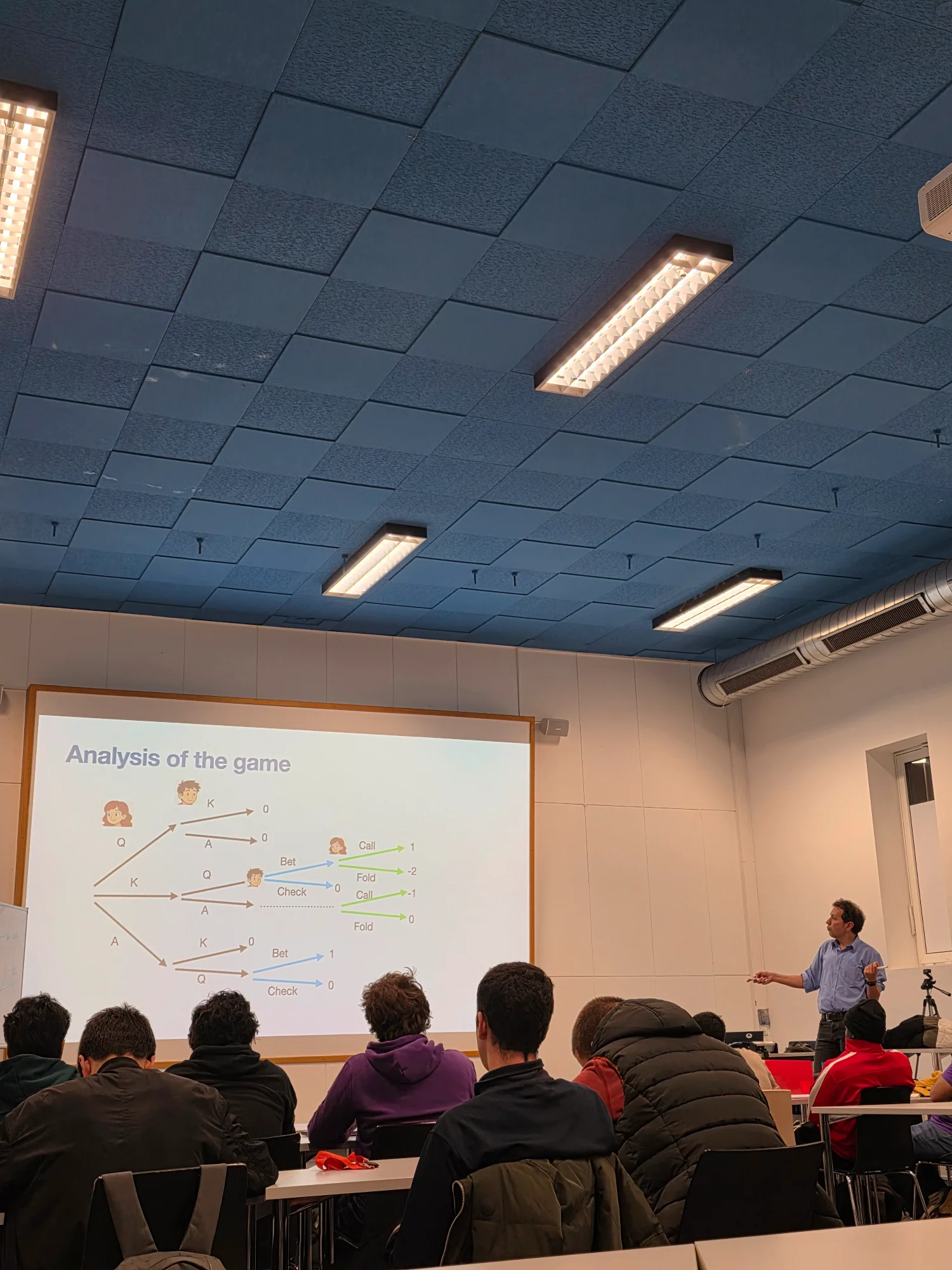
Professor Mallahi-Karai explaining the mathematical foundations of optimal poker strategy
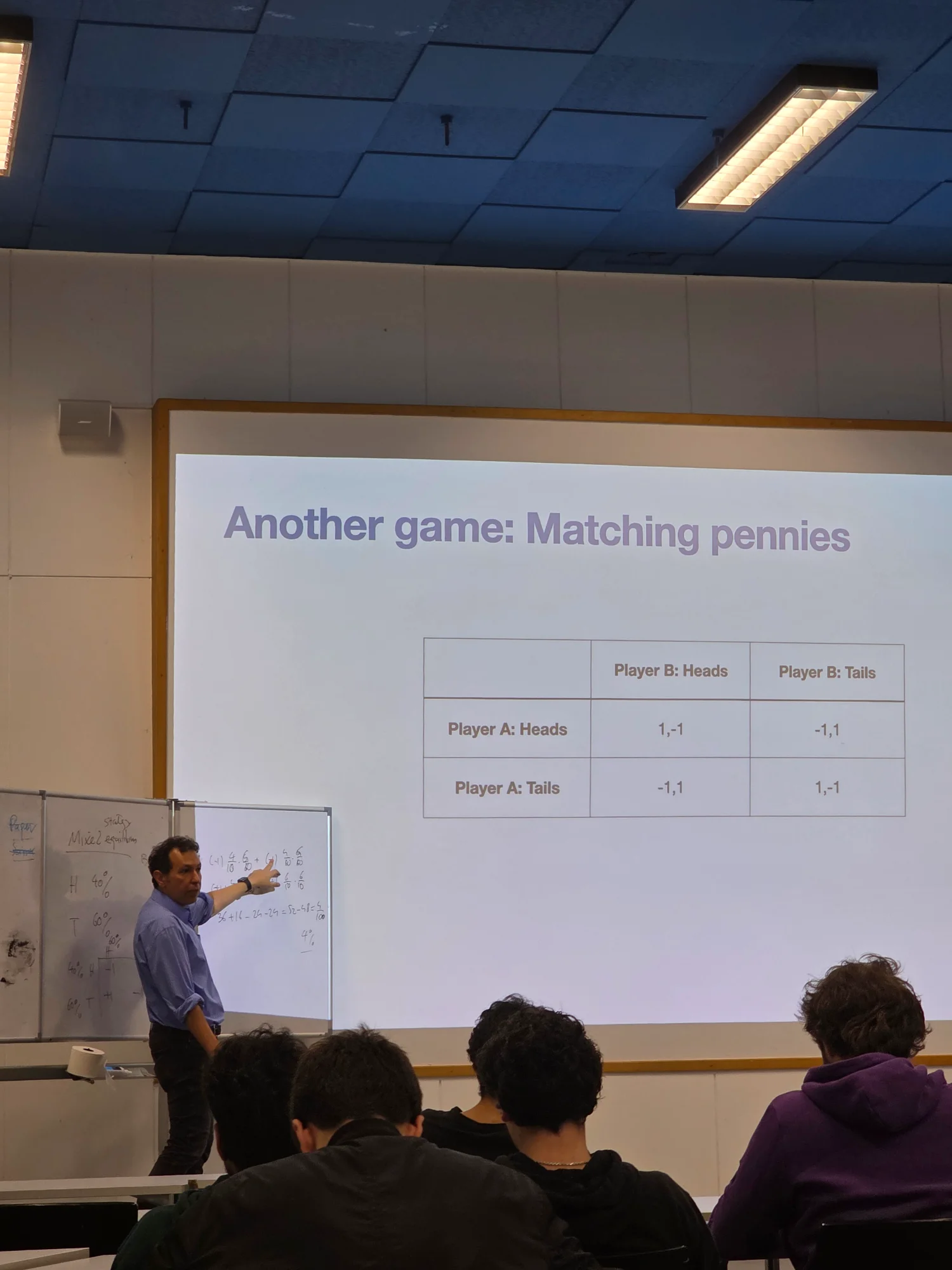
Building the theory: from probability to game theory equilibrium
The Proof: Why You Must Bluff
Here's the mathematical argument: Suppose you never bluff. Your opponent knows that when you bet big, you have a strong hand. They can simply fold every time, minimizing their losses. You win small pots but never extract maximum value from your strong hands.
Now suppose you always bluff with weak hands. Your opponent catches on and calls every time. Now you're losing money on your bluffs while not getting enough value from your strong hands either.
The mathematical sweet spot? Mix your strategies. Bluff just often enough that your opponent can't profitably fold all the time, but not so often that they can profitably call all the time. This is called a mixed strategy Nash equilibrium.

Setting up for the practical session: theory meets practice
The Nash Equilibrium
This concept—called game theory optimal (GTO) play—means balancing your strong hands and bluffs in precise proportions. When you achieve this balance, your strategy becomes unexploitable. It doesn't matter if your opponent knows you're balanced—they still can't beat you.
Theory Meets Felt: The Candy Stakes Poker Game
After exploring the mathematical theory, it was time to put it into practice. The room transformed: Math Society staff became poker dealers, tables were set up, and instead of chips, we had candies.
Betting candies might sound whimsical, but it captured the essential dynamics perfectly. Players still felt the tension of risk and reward. The bluffs still mattered. And most importantly, we could see the mathematical concepts playing out in real time.
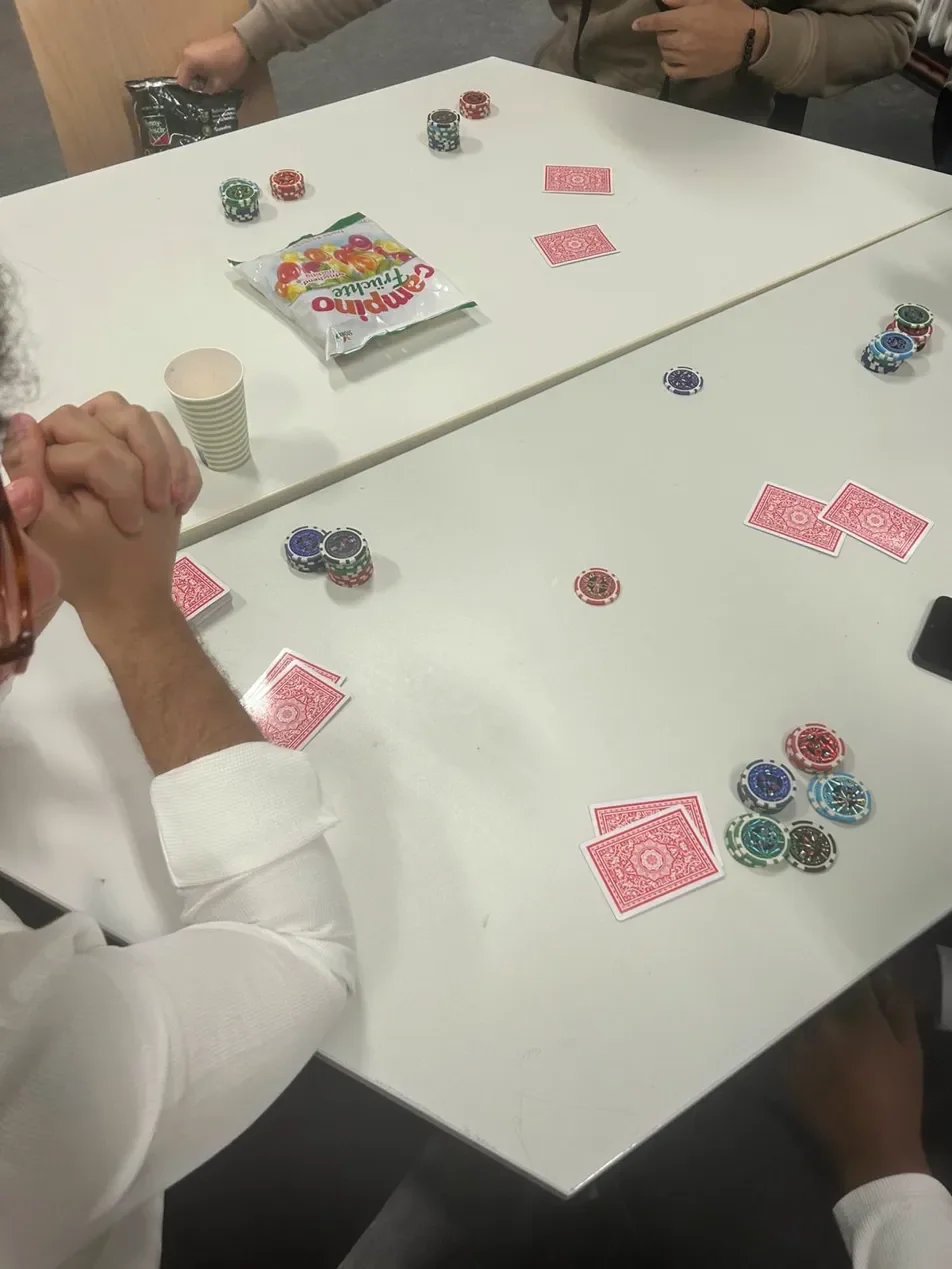
Math Society staff as table dealers - betting with candies instead of money

Participants betting on candies while applying game theory strategies

The candy stakes poker game in action with Math Society staff as dealers
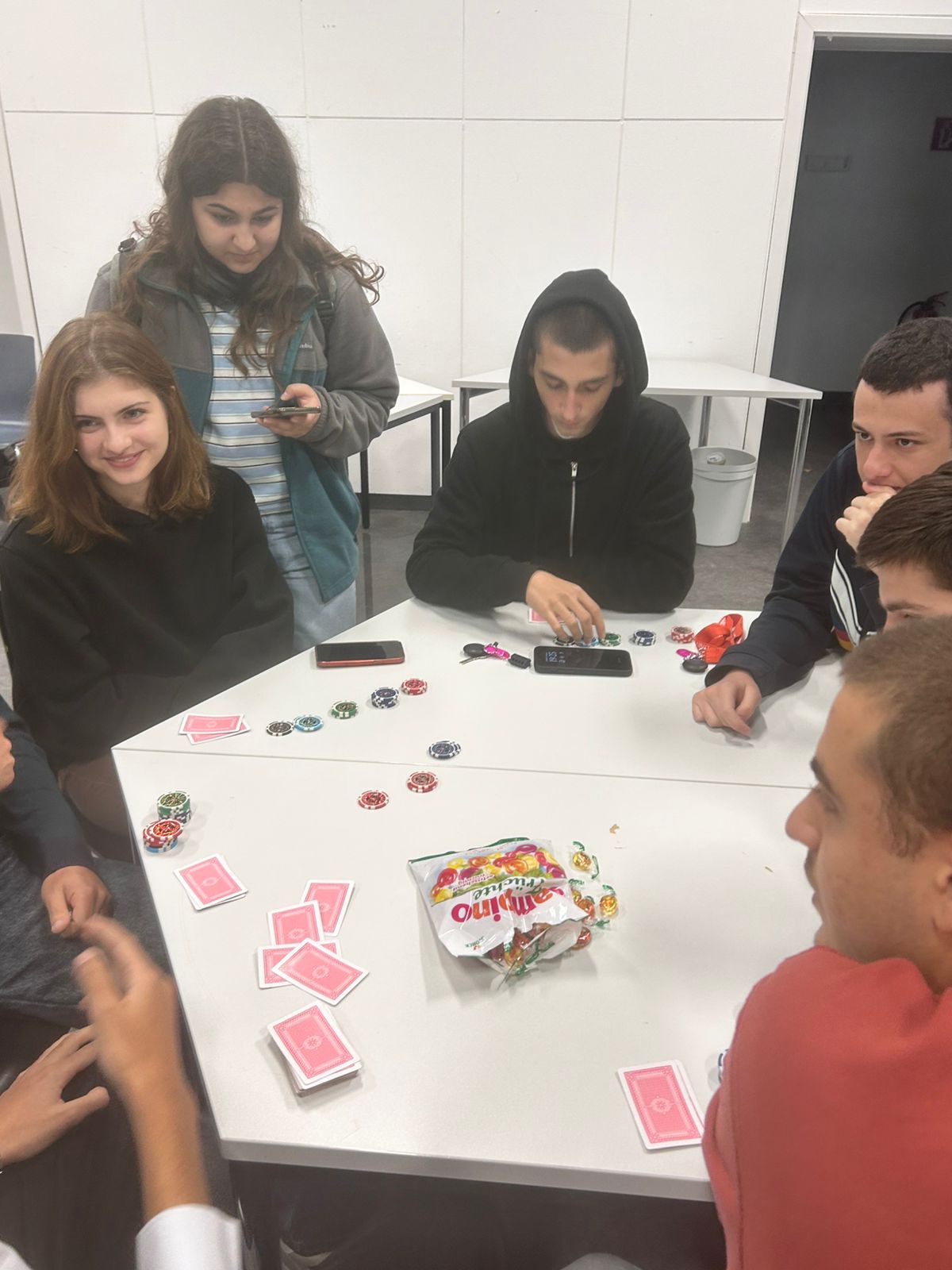
Testing mathematical equilibrium with candy bets at our poker tables

What Makes This Mathematical, Not Just Psychological
Many people think poker is about "reading people" or having a "poker face." While psychology plays a role, the mathematics proves something deeper: even against a robot with no tells, optimal play requires bluffing.
Here's why this matters: if two mathematically perfect players faced each other, both would still bluff. Not because they're trying to deceive each other—the deception wouldn't work against perfect play—but because the mathematics demands it for balance.
Beyond the Poker Table
The same mathematical principles apply far beyond poker. Businesses bluff about their costs during negotiations. Animals use mixed strategies in territorial disputes. Cybersecurity systems randomize their protocols to prevent exploitation. Military strategists create uncertainty about their plans.
In each case, the mathematics proves the same thing: when competing interests clash, pure predictability is a losing strategy. Optimal play requires calculated unpredictability.
The Takeaway
What started as a question about poker—"why does bluffing work?"—led us deep into fundamental mathematics. We learned that the answer isn't psychological or cultural. It's mathematical. Bluffing works because the math proves it must.
Professor Mallahi-Karai didn't just teach us poker. He showed us how mathematics can prove counterintuitive truths about strategy, competition, and decision-making under uncertainty. And then we got to eat candy while testing those truths at the tables.
Remember: the next time someone calls your bluff, you're not just playing poker—you're demonstrating mathematical equilibrium.