Presenting The First Ever Datathon 2026!
Specially Organised by the Mathematics Society at Constructor University (MSCU)
00
DAYS
00
HOURS
00
MINUTES
00
SECONDS
Specially Organised by the Mathematics Society at Constructor University (MSCU)
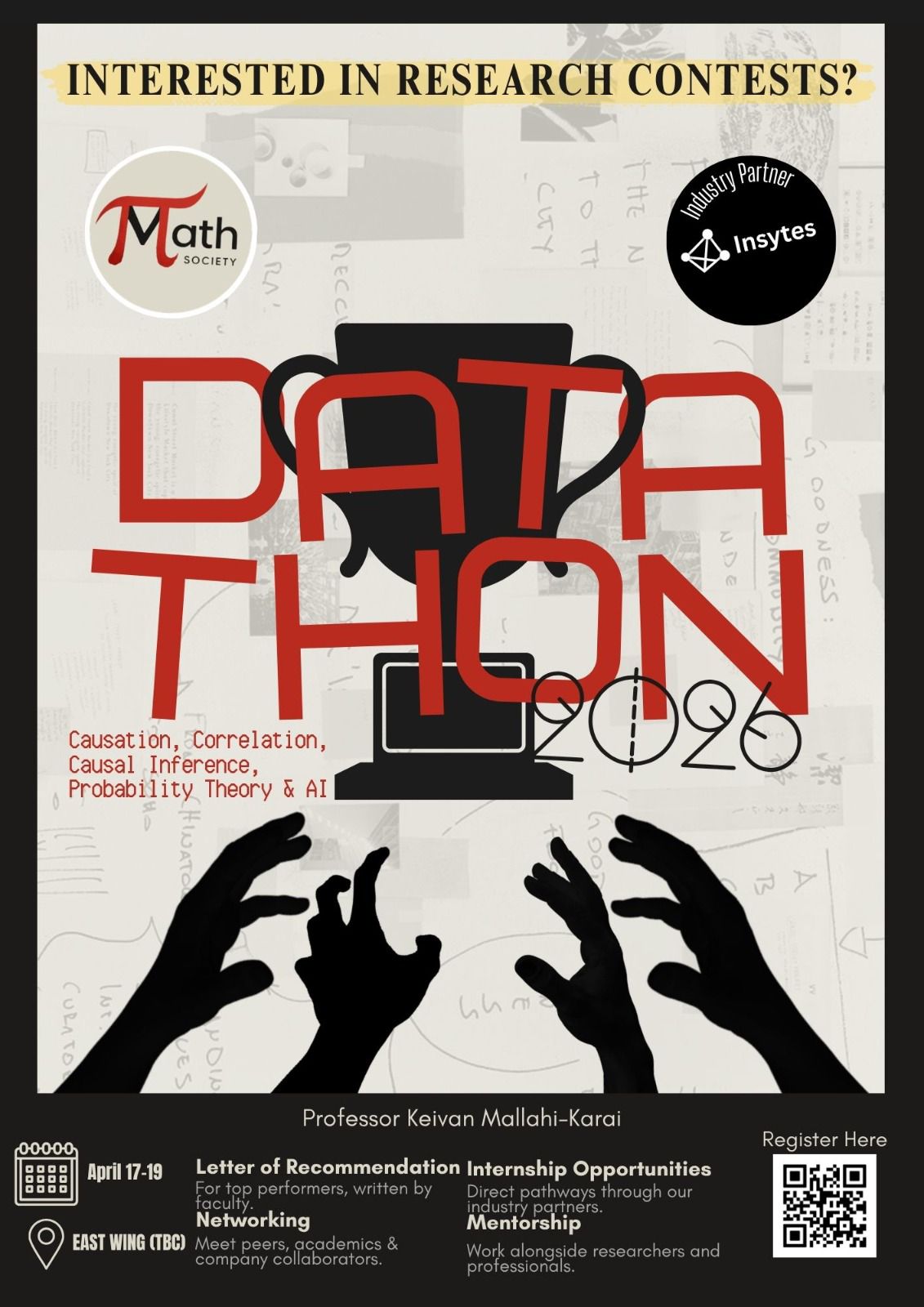
Given data, can you establish causation — not just correlation?
The Constructor University Datathon 2026 invites participants to tackle high-level challenges in causal reasoning and probabilistic modeling. Sponsored by Insytes GmbH, this three-day event challenges teams to apply theory—from directed acyclic graphs to correlation analysis—to practical industry problems. Participants will benefit from the direct support of Insytes GmbH and academic guidance from our specialized faculty.
About Insytes GmbH
Insytes GmbH is a Bremen-based startup founded by Constructor University alumni, working at the intersection of artificial intelligence and industrial data. The company is backed by the EXIST programme of the German Federal Ministry for Economic Affairs, supported through the University of Bremen and BRIDGE.
The team is led by co-founders Karim Abualrish and Varun Patel. Karim is also an active member of the Bremen startup community, helping foster connections between entrepreneurs, researchers, and industry.
 Karim Abualrish
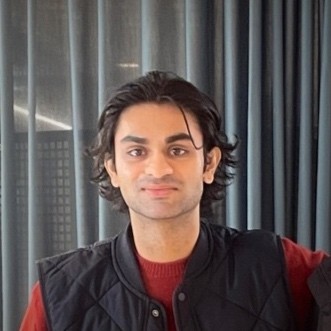 Varun Patel
This year's Datathon is centred on one of the most fundamental questions in data science: not just what is happening in the data, but why. The theme — Causation, Correlation & Causal Inference — challenges participants to move beyond surface-level patterns and build a rigorous understanding of cause and effect.
At the heart of the challenge is causal inference — a framework for reasoning about the effect of interventions and counterfactuals in complex systems. Participants will work with Directed Acyclic Graphs (DAGs) to map out causal relationships between variables, identify confounders, and determine what can and cannot be inferred from observational data alone.
Probabilistic reasoning ties it all together — giving teams the tools to quantify uncertainty, model dependencies, and draw conclusions that are not just statistically sound, but causally meaningful. Whether you are building models, interpreting results, or designing interventions, thinking probabilistically is key to getting the right answer for the right reasons.
Day 1 focuses on orientation, context-setting, and launching the challenge. The challenge introduction and technical briefing run back to back so teams have a complete picture before the keynote, academic talk, and panel discussion. Teams begin working in the afternoon.
Day 1 at a glance:
| 14:00–14:30 | Registration & participant check-in |
| 14:30–14:45 | Opening remarks & event introduction |
| 14:45–15:15 | Keynote talk — Automated Theorem Proving Using Causal ML |
| 15:15–15:35 | Academic talk — Introduction to Causal AI |
| 15:35–16:05 | Panel discussion — From Proof to Product |
| 16:05–16:35 | Coffee break & networking |
| 16:35–16:55 | Introduction of the challenge problem |
| 16:55–17:15 | Technical briefing for teams |
| 17:15–19:00 | Team Work Session 1 — problem exploration |
Day 2 is primarily a free working day for teams, focused on independent development of solutions. Teams formalize causal hypotheses using DAGs, build causal and probabilistic models, and iterate on testing and validation. Optional in-person support is available for teams who need help.
Day 2 takes place in the IRC Seminar Room, with lunch self-arranged.
Day 2 at a glance:
| 09:00–12:00 | Team Work Session 2 — model development |
| 11:00–13:00 | Optional in-person Q&A and support session (IRC Seminar Room 3) |
| 12:00–13:00 | Lunch break (self-arranged) |
| 13:00–17:00 | Team Work Session 3 — final development, visualizations, and draft report/slides |
Day 3 is for finalization, submission, judging, and closing. Teams finalize code, report, and slides in the morning, then submit all deliverables by noon. Presentations and evaluation follow in the afternoon, ending with awards and closing networking.
Submission deliverables are: code repository, final report, and presentation slides.
Day 3 at a glance:
| 09:00–12:00 | Team Work Session 4 — finalization |
| 12:00 | Submission deadline |
| 12:00–13:00 | Lunch break (self-arranged) |
| 12:00–15:30 | Judging setup (East Wing, on-site and remote evaluation) |
| 15:30–17:00 | Team presentations (6 minutes + Q&A per team) |
| 17:30–18:00 | Judging & deliberation |
| 18:00–18:20 | Awards ceremony & closing remarks |
| 18:20–19:00 | Closing dinner & networking |
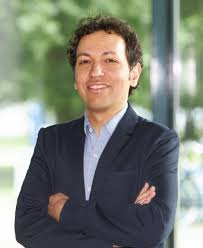 Dr. Keivan Mallahi Karai
Karim Abualrish
Varun Patel
Dr. Keivan Mallahi Karai
Karim Abualrish
Varun Patel
Winning teams will be recognised at the awards ceremony on the evening of April 19. Prizes include:
Special recognitions may also be awarded — details to be confirmed closer to the event.
Sponsors & Partners
The Datathon 2026 is organised with the support of Constructor University as
the host institution and Insytes GmbH as the industry partner. Insytes GmbH
contributes the challenge problem, dataset, mentorship, and judging — bringing real-world
industry expertise directly into the competition.
Ready to take part?
Sign up now to secure your spot at the Constructor University Datathon 2026. Places are limited, so don't wait too long!
Register Now →